
The Sunshine Coast has more than fifty registered chiropractors spread from Caloundra to Noosa, across the coast and into the hinterland around Nambour. Most people choose based on convenience — who is closest, or who came up first in a search. That works well enough, until it doesn't: you end up with a practitioner whose approach doesn't suit you, or a clinic that can only treat part of what is going on.
This guide is designed to help you make a more considered choice. It covers what chiropractors actually treat, when a physiotherapist is a better fit, what to look for in a multi-discipline clinic, how bulk billing and NDIS funding work, and what makes a genuinely well-resourced Sunshine Coast chiropractic clinic different from a basic adjustment practice.
What does a chiropractor actually treat?
Chiropractors are registered health professionals who diagnose and treat conditions affecting the musculoskeletal system — the muscles, joints, bones, nerves and connective tissue that make up your body's physical framework. In Australia, chiropractors must be registered with AHPRA (the Australian Health Practitioner Regulation Agency), which sets the standards for education and ongoing professional development.
The most common reasons people see a chiropractor on the Sunshine Coast include:
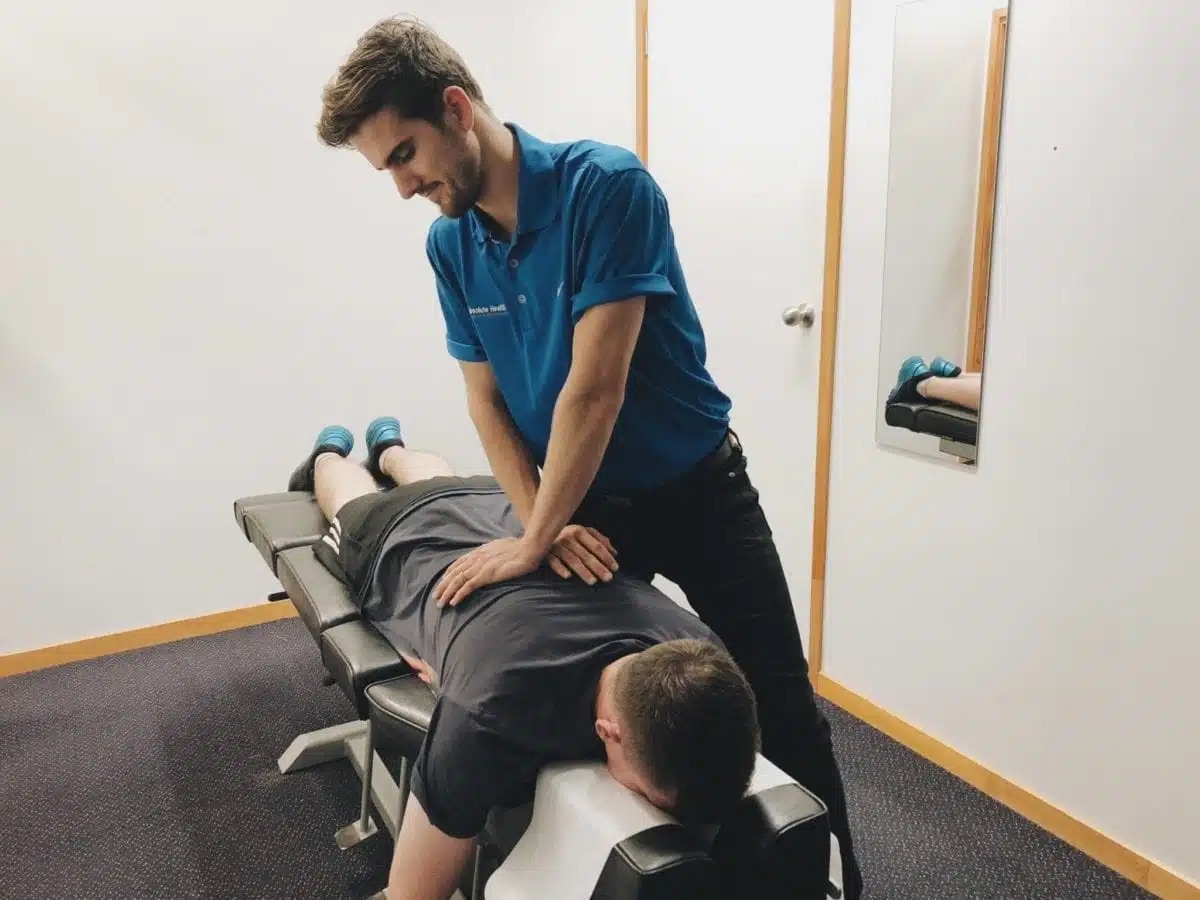
- Lower back pain, whether acute after a strain or chronic and recurring
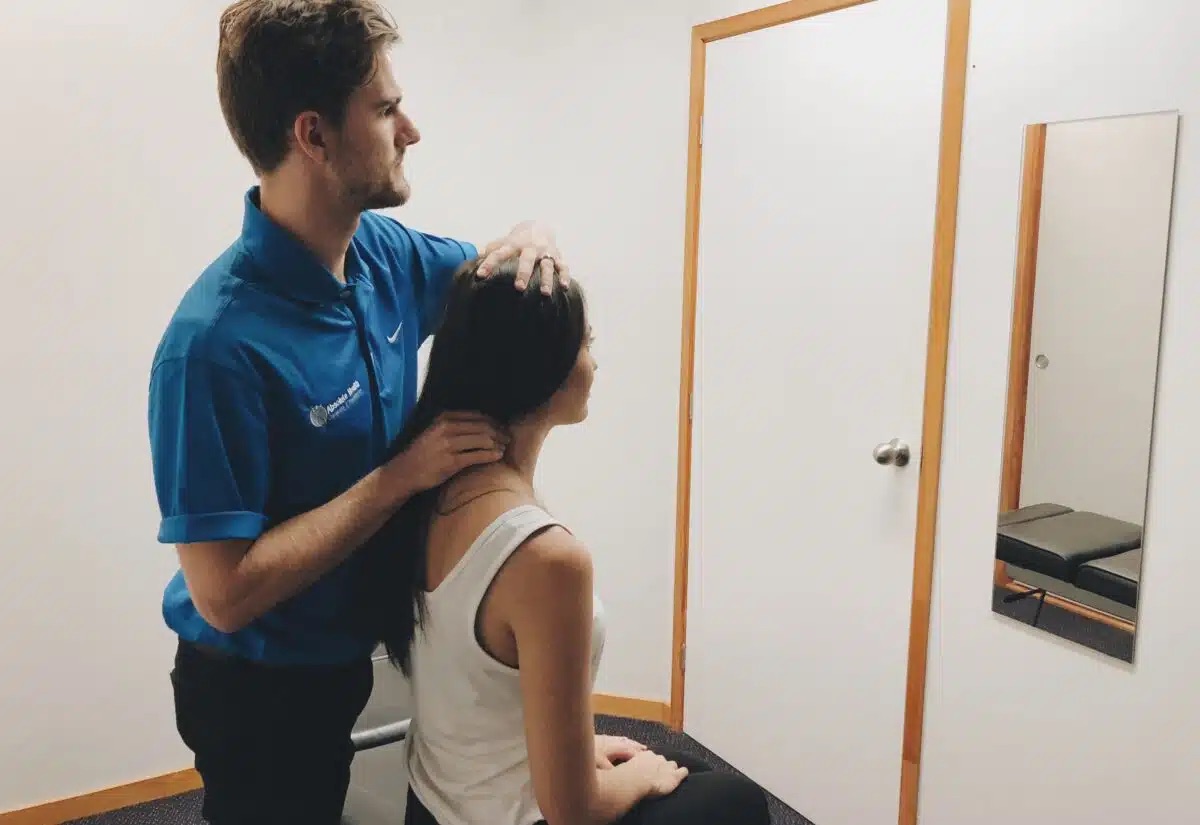
- Neck pain and stiffness, including pain from poor posture or extended desk work
- Headaches — particularly tension headaches and cervicogenic headaches that originate in the neck
- Sciatica — pain, tingling or numbness running from the lower back into one or both legs
- Joint pain in the hips, knees, shoulders or wrists
- Sports injuries, including soft tissue injuries and overuse conditions
- Postural problems, including rounded shoulders and forward head posture
Chiropractic treatment involves more than spinal adjustments, though adjustments are often part of the picture. Soft tissue therapy, rehabilitation exercises, dry needling, postural retraining and advice on movement and ergonomics all fall within a chiropractor's scope of practice. The best practitioners draw on a range of techniques rather than applying the same approach to every patient.
Chiropractor or physiotherapist — which do you need?
This is one of the most common questions we hear at Absolute Health. Both chiropractors and physiotherapists treat pain and movement problems, and there is genuine overlap between the two professions. The distinction matters, though, because each brings a different lens to assessment and a different set of tools to treatment.
Chiropractors focus primarily on the spine and nervous system — specifically on how spinal dysfunction affects overall body function. The chiropractic model looks at spinal joint mechanics, nerve interference and the downstream effects on the musculoskeletal system. Chiropractors are particularly well-suited to spinal conditions — back and neck pain, disc-related issues, headaches with a cervical origin — and to joint-focused problems elsewhere in the body.
Physiotherapists take a broader scope, working across all aspects of musculoskeletal and neurological rehabilitation. Sports injuries, post-surgical rehabilitation, pelvic floor dysfunction, vestibular conditions (such as dizziness and BPPV), exercise prescription, women's health, chronic disease management and neurological rehabilitation all fall within physiotherapy. Physios tend to emphasise active rehabilitation — building strength and resilience through movement — as much as hands-on treatment.
In practice, the line is not always clean. Many conditions benefit from both disciplines. A lower back problem with a disc component might start with chiropractic care to restore joint mobility and reduce nerve irritation, then transition to physiotherapy for core strengthening and movement retraining. A chronic neck condition might need hands-on manual therapy from both professions, plus a targeted exercise program to prevent recurrence.
The most honest answer to the chiro-versus-physio question is: it depends on your specific condition, and ideally you should not have to choose. The best outcomes often come from coordinated care between the two disciplines — which is why seeing a clinic where both practice under one roof has a real clinical advantage over choosing one or the other in isolation.
Why a multi-discipline clinic makes a difference
Most chiropractic clinics on the Sunshine Coast offer chiropractic only. Many physiotherapy clinics offer physiotherapy only. A smaller number offer both, but with practitioners working in separate silos — separate records, no shared case discussion, no coordinated plan.
A genuinely integrated multi-discipline clinic is different. When your chiropractor and physiotherapist can discuss your case, refer across to each other, and design a treatment plan that draws on the strengths of both disciplines, the clinical outcome improves. You do not have to manage your own care across two organisations with two separate referral chains.
At Absolute Health, chiropractors, physiotherapists, vestibular physiotherapists and exercise physiologists work together at both the Mooloolaba and Nambour clinics. A patient presenting with dizziness and neck pain can be assessed across chiropractic and vestibular physiotherapy in a single environment, rather than being sent between providers. A patient with a spinal condition and a concurrent sports injury can receive both chiropractic and physiotherapy input without attending multiple clinics.
The multi-discipline model also matters for complex cases — patients with NDIS funding, chronic conditions, performance goals, or multiple overlapping complaints. Having access to several disciplines under one roof reduces friction and improves continuity of care.
Six things to look for in a Sunshine Coast chiropractor
These are the criteria worth applying when you are evaluating your options.
1. AHPRA registration
Every practising chiropractor in Australia must hold current registration with AHPRA. You can search the public register at ahpra.gov.au to verify any practitioner you are considering. This is a baseline requirement, not a differentiator — but it is worth confirming, particularly for smaller or less well-known clinics.
2. Experience with your specific condition
A chiropractor with broad general experience and one who has spent years treating a particular condition — sciatica, headaches, sports injuries, postural problems — are not the same clinician. Ask whether the clinic sees a significant volume of your type of presentation. Check practitioners' profiles for postgraduate training or clinical interests that align with what you need. Specialist experience matters most for complex or long-standing conditions that have not responded to general treatment.
3. A range of techniques, not a single method
Some chiropractic clinics use one technique for every patient. The better ones assess each patient individually and draw on a range of tools depending on what the examination reveals — adjustments, soft tissue therapy, dry needling, exercise prescription, postural retraining, joint mobilisation. A practitioner who applies the same method regardless of presentation is a yellow flag. A thorough clinical examination should always precede treatment, and the treatment approach should follow from what the examination finds.
4. Access to on-site diagnostics
Good clinical decision-making requires good information. An on-site digital X-ray suite allows your chiropractor to assess spinal structure, identify degeneration, rule out serious pathology and track changes over time — without sending you to a separate radiology provider and waiting days for results. Advanced clinics also offer movement assessment tools that give a dynamic picture of how your body actually moves under load, not just how it looks at rest.
5. Transparent fees and realistic care plans
Some chiropractic businesses operate on a high-pressure model — signing patients into multi-month treatment packages at the first consultation, before a diagnosis has been established and before you know whether the treatment works. A trustworthy clinic is transparent about fees before treatment begins, accepts private health insurance with on-the-spot HICAPS claiming, and recommends a care plan based on your actual progress rather than a predetermined number of sessions.
Ask specifically: how will we measure whether the treatment is working? A clear answer — with defined outcome measures and a scheduled review point — distinguishes evidence-informed practice from a production-line approach.
6. Continuing professional development
The evidence base for musculoskeletal care evolves. Practitioners who invest in postgraduate training, advanced certifications and professional development are more likely to be working with current clinical evidence. Ask whether practitioners hold specialist certifications relevant to your condition, and whether the clinic participates in ongoing education programs.
What to expect at your first chiropractic appointment
Many first-time patients are uncertain what a chiropractic consultation involves. Here is a straightforward account of what typically happens.
The first appointment is primarily an assessment. Your chiropractor will take a full history — how long the problem has been present, what makes it better or worse, what you have tried before, your general health history, and any medications or conditions that are relevant. This process takes time and should feel thorough.
A physical examination follows. This includes orthopaedic and neurological testing of the relevant area, assessment of joint mobility and soft tissue tension, and postural observation. If spinal imaging is clinically indicated, your chiropractor may arrange digital X-rays on the same day or refer you for imaging.
At the end of the first appointment you should receive a diagnosis or working assessment, a proposed treatment plan with a clear rationale, realistic information about expected timelines, and an honest account of what improvement looks like and by when. You should not leave the first visit having signed a payment plan before you have been examined.
Treatment may begin at the first appointment, or your chiropractor may prefer to wait until all assessment information is available. Where it is appropriate to treat, the first hands-on session often follows the examination on the same day — meaning first appointments can run 45 to 60 minutes. See our What to Expect guide and New Patient Centre for more detail on what to bring and how to prepare.
Bulk billing and NDIS: understanding your funding options
Two funding pathways are often misunderstood by patients seeking chiropractic care on the Sunshine Coast.
Medicare Enhanced Primary Care (EPC): Medicare's EPC program allows GPs to refer patients with chronic or complex conditions to allied health providers — including chiropractors and physiotherapists — for up to five sessions per calendar year. When a clinic bulk bills under this arrangement, eligible patients pay nothing out of pocket for those sessions. Not all clinics participate; ask specifically whether the practitioner bulk bills EPC referrals before you attend. Our bulk billing page explains how this works at Absolute Health and what conditions make a patient eligible for GP referral under the scheme.
NDIS funding: NDIS participants can use their plan funding to access chiropractic and physiotherapy where these services are included in their plan under an approved support category. The process involves your plan manager or support coordinator and requires a service agreement with the clinic — but the funding can make a significant difference to the frequency and continuity of care that NDIS participants can access. If you are an NDIS participant looking for chiropractic or physiotherapy on the Sunshine Coast, our NDIS services page covers how to access funded sessions at Absolute Health.
Chiropractic on the Sunshine Coast: coast, suburbs and hinterland
The Sunshine Coast covers a large geographic area, and access to quality chiropractic care is not evenly distributed across it. The coast — Mooloolaba, Maroochydore, Buderim, Kawana, Caloundra — is reasonably well-served. The outer suburbs and hinterland are not.
Nambour and the surrounding towns — Woombye, Yandina, Eumundi, Palmwoods, Montville, Maleny — have fewer allied health options than the coastal strip. Patients in these areas often travel further or wait longer for appointments. Our Nambour clinic on Howard Street serves the hinterland community, and we see patients from across the Sunshine Coast hinterland who want access to a full multi-discipline allied health team without making the trip to the coast.
Our Mooloolaba clinic on Smith Street serves the central coast — Mooloolaba, Alexandra Headland, Maroochydore, Mountain Creek, Kawana, Buderim and surrounds. Both clinics offer the same full service range: chiropractic, physiotherapy, vestibular physiotherapy, dry needling, NDIS services and MotionIQ diagnostics.
What advanced Sunshine Coast clinics offer
Beyond spinal adjustments and exercise tables, some clinics are investing in clinical technology that meaningfully changes what is possible in assessment and treatment.
Digital X-ray on site
On-site digital X-ray allows same-session imaging without an external radiology referral. For spinal conditions in particular, seeing the structure of the spine — disc spaces, joint degeneration, curvature, bone changes — alongside a clinical examination produces a more complete diagnostic picture. Digital X-ray also reduces radiation dose compared to older film-based systems and produces immediately viewable images that can be discussed with you during the appointment.
MotionIQ movement diagnostics
Standard clinical assessment captures how a patient presents at rest or in simple movements. MotionIQ is an advanced movement analysis system that uses sensor technology to capture how the body actually moves under real-world conditions — walking, running, functional loading patterns. This matters for patients with complex presentations, performance goals, or chronic conditions where standard examination has not identified the underlying driver of the problem.
MotionIQ data provides objective baseline measurements and allows clinicians to track functional change over time — giving patients a concrete picture of what is actually happening in their movement patterns, rather than relying on verbal description alone. It is particularly useful for athletes, NDIS participants with gait or balance presentations, and patients who have been through multiple treatment attempts without a clear answer.
Frequently asked questions about chiropractic on the Sunshine Coast
This depends heavily on the condition, how long it has been present, and how your body responds to treatment. An acute, straightforward problem — a muscle strain, a recent onset of neck stiffness — may resolve in three to six sessions. A chronic or complex spinal condition may require longer-term care. Any clinic that tells you the number of sessions you need before assessing you should be treated with scepticism. A good practitioner will set a review point early in treatment, assess your progress against objective measures, and adjust the plan accordingly.
Yes. Most extras (ancillary) private health insurance policies in Australia cover chiropractic. The rebate amount varies by fund and policy level. Most Sunshine Coast chiropractors use HICAPS for on-the-spot claiming, so you pay only the gap at the time of your appointment. Bring your health insurance card to your first appointment. If you are unsure of your cover, check with your fund before attending.
Yes — at multi-discipline clinics like Absolute Health. Having both practitioners under the same roof with access to shared case records means your care is coordinated rather than duplicated. You can move between disciplines as your needs change, and your treating practitioners can discuss your case directly. This is clinically preferable to managing care across two separate organisations. See our services page for the full list of disciplines available at our Mooloolaba and Nambour clinics.
No referral is required to book a chiropractic or physiotherapy appointment. You can book directly online or by calling either clinic. The exception is Medicare-funded sessions via an Enhanced Primary Care (EPC) plan, which requires a GP referral and management plan. If you are an NDIS participant, your plan needs to include allied health supports and a service agreement must be in place with the clinic — but you can contact us directly to start that process.
A cervicogenic headache originates in the cervical spine — the joints, muscles and nerves of the neck — and refers pain into the head. It typically presents on one side, often starts in the neck or back of the head, and is triggered or worsened by neck movements or sustained postures. Migraines involve neurological changes including altered blood flow and nerve sensitivity, often accompanied by nausea, light or sound sensitivity, and in some cases aura. Cervicogenic headaches respond well to chiropractic and manual therapy directed at the cervical spine. Migraines are more complex and may benefit from a combination of manual therapy, lifestyle factors and medical management. Many patients are surprised to discover their headaches have a cervical component — a thorough clinical examination can distinguish between the two types.
Dizziness and vertigo have several possible causes. Benign paroxysmal positional vertigo (BPPV) — the most common type, caused by displaced crystals in the inner ear — responds very well to specific repositioning manoeuvres performed by a trained vestibular physiotherapist, often resolving in one to three sessions. Cervicogenic dizziness, where neck dysfunction contributes to dizziness symptoms, falls within the scope of chiropractic and manual therapy. Other types of dizziness may require medical assessment. At Absolute Health, our vestibular physiotherapy team assesses and treats dizziness and balance disorders across both Sunshine Coast clinics, working alongside our chiropractic and physiotherapy practitioners.
Chiropractic care has a strong safety record across its registered clinical application. The most common side effects following a spinal adjustment are temporary — mild soreness or stiffness in the treated area, typically resolving within 24 to 48 hours. Serious adverse events are rare. Your chiropractor will take a full health history before beginning treatment to identify any contraindications, and will modify their technique accordingly. If you have a history of osteoporosis, blood clotting conditions, or specific spinal pathology, inform your chiropractor before treatment begins. If you are uncertain whether chiropractic is appropriate for your situation, discuss this with your GP or contact us directly ahead of your first appointment.