
Imagine waking up one morning with a frozen shoulder, unable to move your upper arm more than a few inches in any direction. How much would that affect your ability to do your job? How much would it affect your ability to drive your car or even dress yourself? How much would it affect your ability to concentrate on anything other than your shoulder? Clearly, if your shoulder did not move correctly, it would have a dramatic impact on your life. The same is true of movement in every part of your body. If things are not moving the way they are supposed to, it will have a negative impact on your ability to function at work, manage the demands of everyday life and even concentrate.
Many patients with severe low back pain report that their pain came on suddenly when they did something as simple as bending down to pet the cat, put on their socks or pick up the newspaper. Just about everyone would agree that a person's body should be able to handle such simple movements. So what has happened?
In every one of these cases, the joints of the patient's body were all locked up and barely moving at all. When the joints in one area of the body do not move the way they should, other areas are forced to move more in order to compensate. This places significant stress on the areas that have to pick up the slack, and it soon leads to pain and inflammation. At the same time, the areas that lack normal movement slowly worsen as the muscles continue to tighten, the joints stick together, and the ligaments and tendons shorten. This leaves the body in a very unstable condition. If left unchecked, the process continues until the body can hardly move at all. That is how a person comes to suffer flare-ups of pain at the slightest provocation.
Most of us have seen people who have lost much of their normal mobility, looking as though their bodies have been starched stiff whenever they try to move around. This is especially common among the elderly. Contrary to popular belief, however, it is not an inevitable effect of ageing. Rather, it is the inevitable effect of not maintaining the body's mobility through exercise, healthy alignment and good body mechanics. There are people in their 60s, 70s and beyond who are stronger and more flexible than the average person in their 30s, simply because they keep exercising.
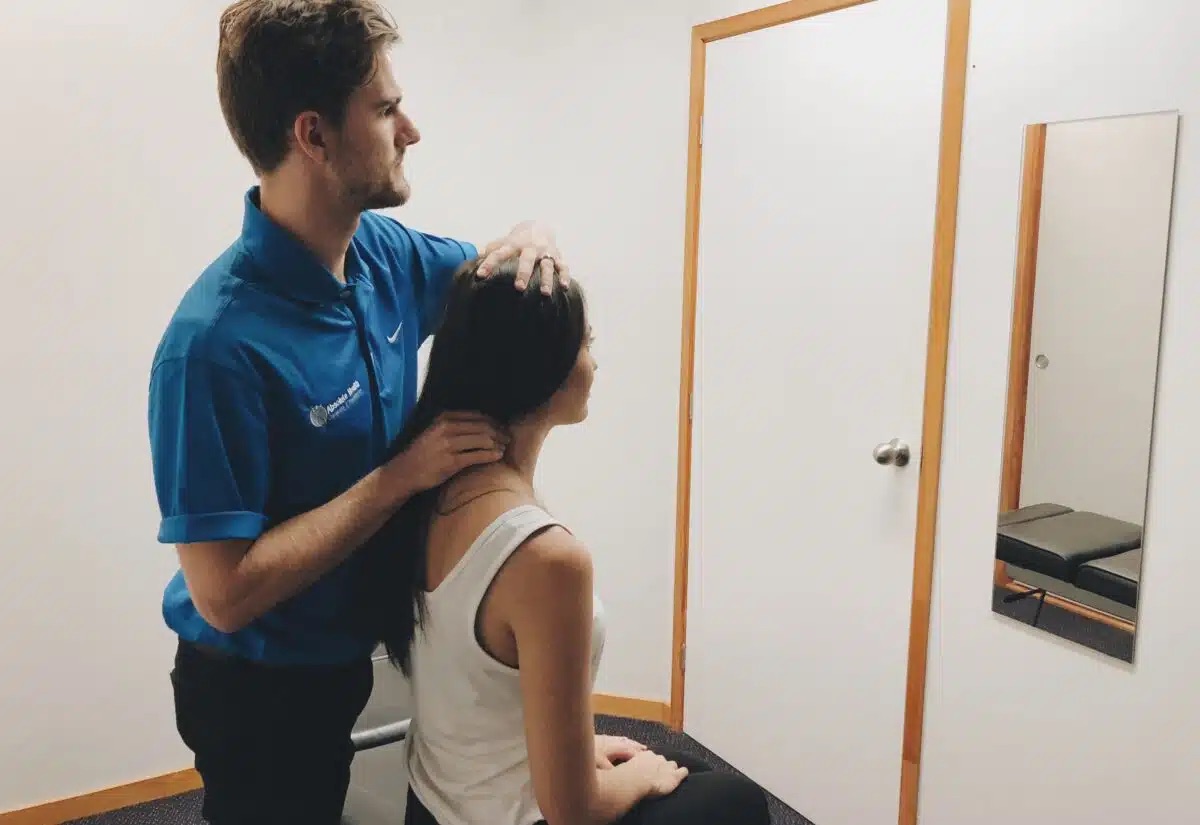
Maintaining mobility is critical to living free from pain and disability. Keeping good mobility is not difficult, but it does not happen on its own. Just as with developing good posture, you need to perform specific exercises and stretches to keep your muscles, ligaments and tendons flexible and healthy. It is also necessary to keep all of the joints in your body moving correctly. Although this can be achieved to a great degree through stretching, most people also find routine chiropractic adjustments very beneficial.