A herniated disc can cause anything from dull localised back pain to shooting nerve pain in the leg or arm. Most disc herniations don't need surgery. Our chiropractors and physiotherapists at Mooloolaba and Nambour treat them with a conservative, targeted approach.
Written and clinically reviewed by Matthew Smith (Chiropractor) and Geoff Villacis (Physiotherapist) · Reviewed August 2026
Intervertebral discs sit between each pair of vertebrae, acting as cushions and allowing the spine to move. Each disc has a tough outer ring (the annulus fibrosus) surrounding a gel-like centre (the nucleus pulposus). A herniation - sometimes called a slipped disc, bulging disc or prolapsed disc - occurs when the inner material pushes through a weakness or tear in the outer ring.
In the lumbar spine, this commonly compresses the nerve roots that form the sciatic nerve, causing the pain, numbness and tingling that runs into the leg. In the cervical spine, a herniated disc can cause neck pain combined with arm pain, pins and needles or weakness. The thoracic spine is less commonly affected.
Not all disc herniations are the same. Some are incidental findings on imaging that cause little functional impact. Others involve significant nerve compression with severe symptoms. Understanding which type you have - through examination and appropriate imaging - is what shapes a targeted treatment approach.
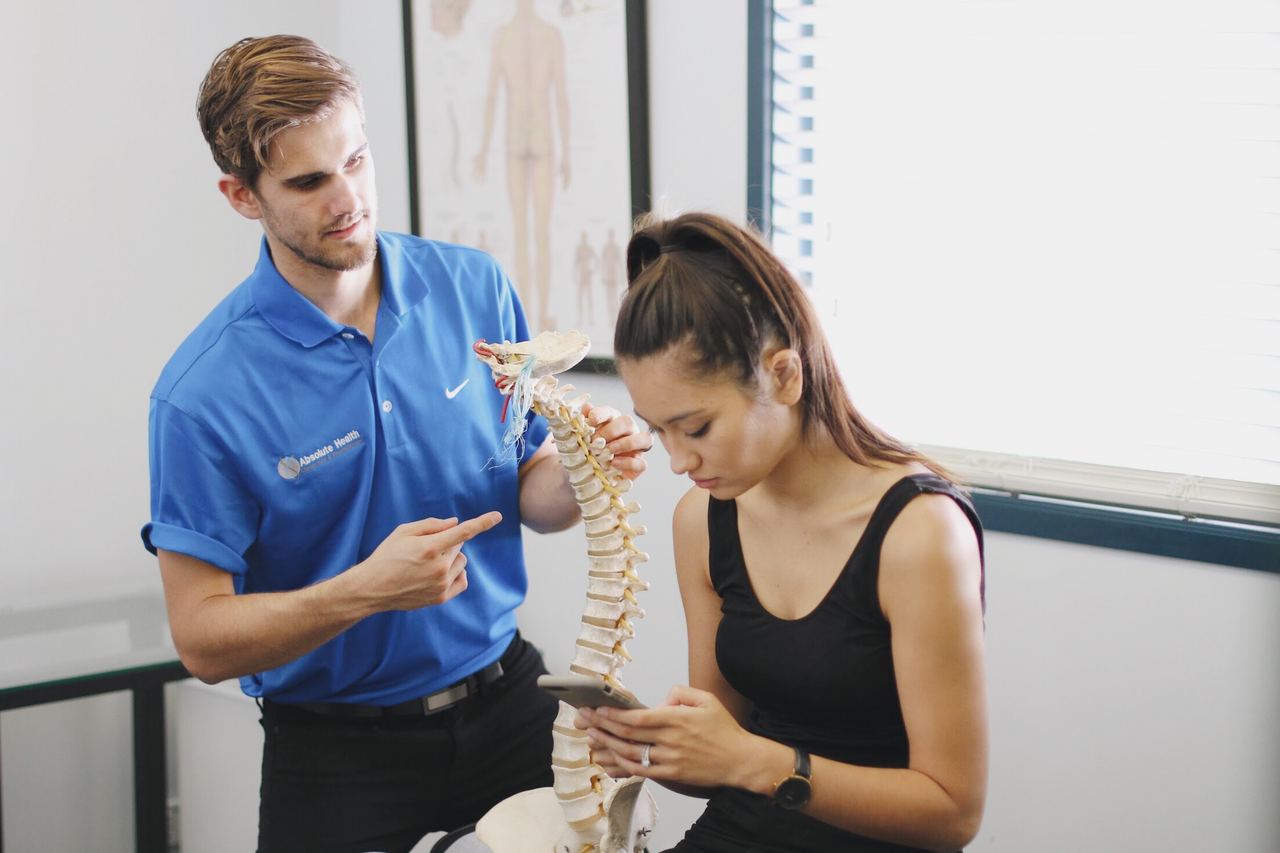
A disc herniation occurs when the nucleus pulposus (inner gel) pushes through the annulus fibrosus (outer ring), potentially compressing nearby nerve roots and causing pain, numbness or weakness in the leg or arm.
When to seek urgent care instead
Numbness around the groin or saddle area, loss of bladder or bowel control, or progressive weakness in both legs needs immediate medical assessment - go straight to a doctor or emergency department.
Both chiropractic and physiotherapy have an evidence base for disc herniations - but with different emphases. Here's how each approach works for this condition.
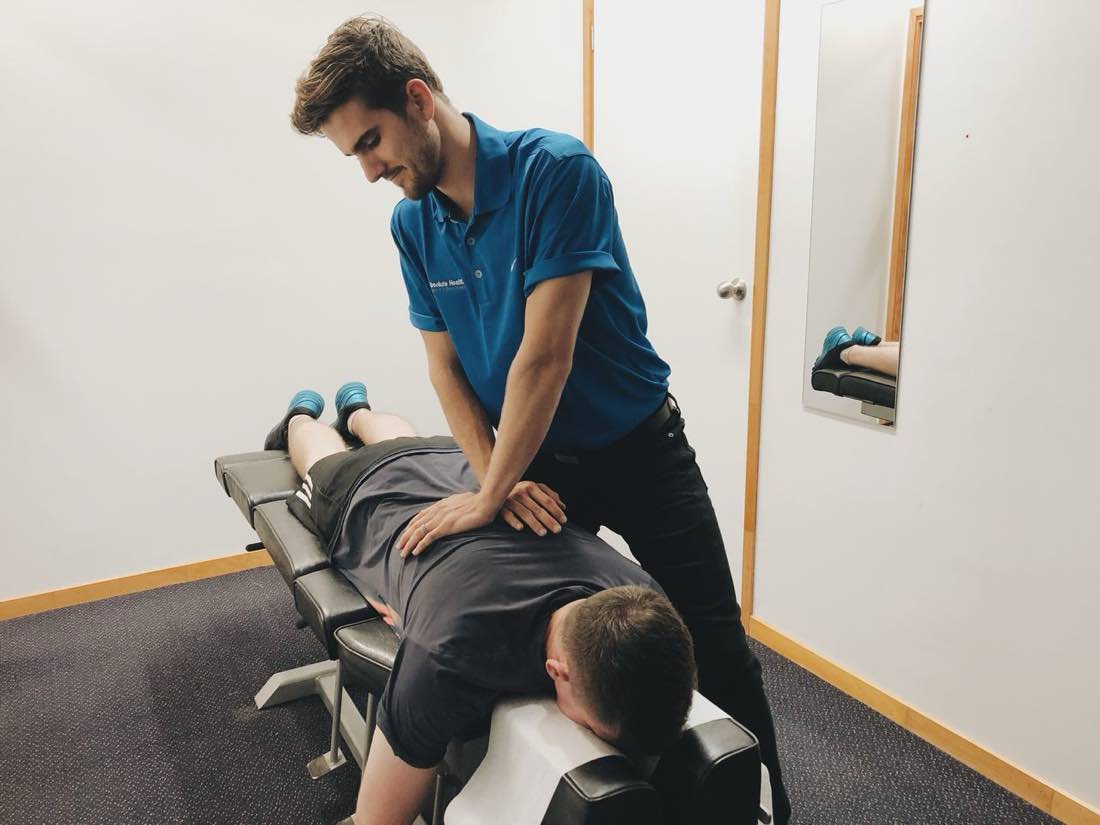
Chiropractic care for disc herniations focuses on reducing nerve irritation at the affected spinal level. Assessment identifies the specific level of herniation, the pattern of nerve involvement, and any contributing mechanical factors - so treatment is targeted rather than generic.
Techniques for disc presentations are typically gentle and specific - traction and low-force mobilisation rather than high-velocity adjustment at the affected level. On-site digital X-ray at our Mooloolaba clinic provides structural information including disc space height and vertebral alignment. MotionIQ motion analysis shows how the affected segment is moving and where compensations are occurring throughout the spine.
Physiotherapy for disc herniations addresses the movement, muscular and neural components. The McKenzie Method - using directional preference exercises to centralise symptoms - is one of the most evidence-based approaches for disc-related pain, and our physiotherapists use it alongside neural mobilisation, manual therapy and progressive loading to guide recovery.
Core strengthening and load management form the foundation of preventing recurrence once the acute phase settles.
Not sure which to choose? Our chiropractors and physiotherapists work together in the same clinic - if you're unsure, just call and we'll point you in the right direction or combine both if that's what your case needs.
Your first consultation starts with a thorough assessment - we don't assume we know the cause before we've examined you. Our chiropractors routinely use MotionIQ to measure exactly how your spine is moving, and re-measure later to check the movement is genuinely coming back. If you are booking with a physiotherapist and want a MotionIQ assessment included, please ask when you book. Here is why that matters.
Dealing with a disc injury on the Sunshine Coast?
Our chiropractors and physiotherapists treat this every day in Mooloolaba and Nambour — same-day appointments are often available.
Yes. Chiropractic care is a well-established conservative treatment for disc herniations. The approach for disc presentations is typically gentle - traction, low-force mobilisation and specific positional techniques - rather than high-velocity manipulation directly at the affected level. Assessment includes identifying the specific level and nerve root pattern so treatment is targeted. Digital X-ray at our Mooloolaba clinic helps clarify the structural picture.
Yes. Physiotherapy is highly effective for disc herniations, particularly through the McKenzie Method (directional preference exercises that centralise symptoms), neural mobilisation to reduce nerve root irritability, and core stability rehabilitation to support the affected segment and prevent recurrence.
Not necessarily. Many disc herniations can be diagnosed and treated effectively based on clinical examination and, where indicated, X-ray. An MRI is typically arranged when symptoms are severe, when neurological findings (weakness, bladder/bowel changes) are present, when there's no improvement after a reasonable trial of conservative treatment, or when surgical consultation is being considered.
Most lumbar disc herniations improve significantly within 6-12 weeks of appropriate conservative care. The disc material can reabsorb over time, and nerve irritation typically settles as the compression reduces. Some presentations - particularly those with significant nerve involvement or very large herniations - take longer. Your case will be assessed and monitored throughout to track progress.
The vast majority of disc herniations - around 80-90% - resolve with conservative management without surgery. Surgery is typically considered when significant neurological deficit is present (weakness, loss of bladder or bowel control), when symptoms are severe and not responding after 6-12 weeks of appropriate conservative care, or when imaging shows a large central herniation requiring urgent intervention.
Yes, if your GP provides a Chronic Disease Management (CDM) referral. Disc herniations associated with a chronic spinal condition may qualify for up to 5 bulk-billed allied health visits per year. Learn more about bulk billing at Absolute Health.
Same-day appointments at Mooloolaba and Nambour. Our team will assess your disc presentation properly and give you a realistic plan - without guesswork.
We'll get back to you shortly · or call (07) 5478 2333