Sciatica sends more people to Google than almost any other pain problem, and the question they type is usually some version of this one: chiropractor or physio? As a clinic that employs both, we can give you an answer with less turf war in it than most. Both professions treat sciatica well. They come at it from different angles, the right choice depends on your situation, and a fair number of people do best with both. This page is about choosing between them. If what you actually want to know is whether chiropractic works for sciatica at all, start with can chiropractic treatment help with sciatica. To book either way, see our sciatica treatment page.
First, what sciatica actually is
Sciatica is a symptom, not a diagnosis. It means pain radiating along the path of the sciatic nerve: buttock, back of the thigh, sometimes calf and foot, often with tingling or numbness. Something is irritating the nerve or its roots, and the something varies. A bulging or herniated disc is the most common culprit. Narrowing of the nerve passages, joint dysfunction in the lower back or pelvis, and compression from a deep buttock muscle can all produce the same leg pain. Working out which one you have is the whole game, because it shapes the treatment. Our sciatica page covers the condition itself in more depth.
What a chiropractor does for sciatica
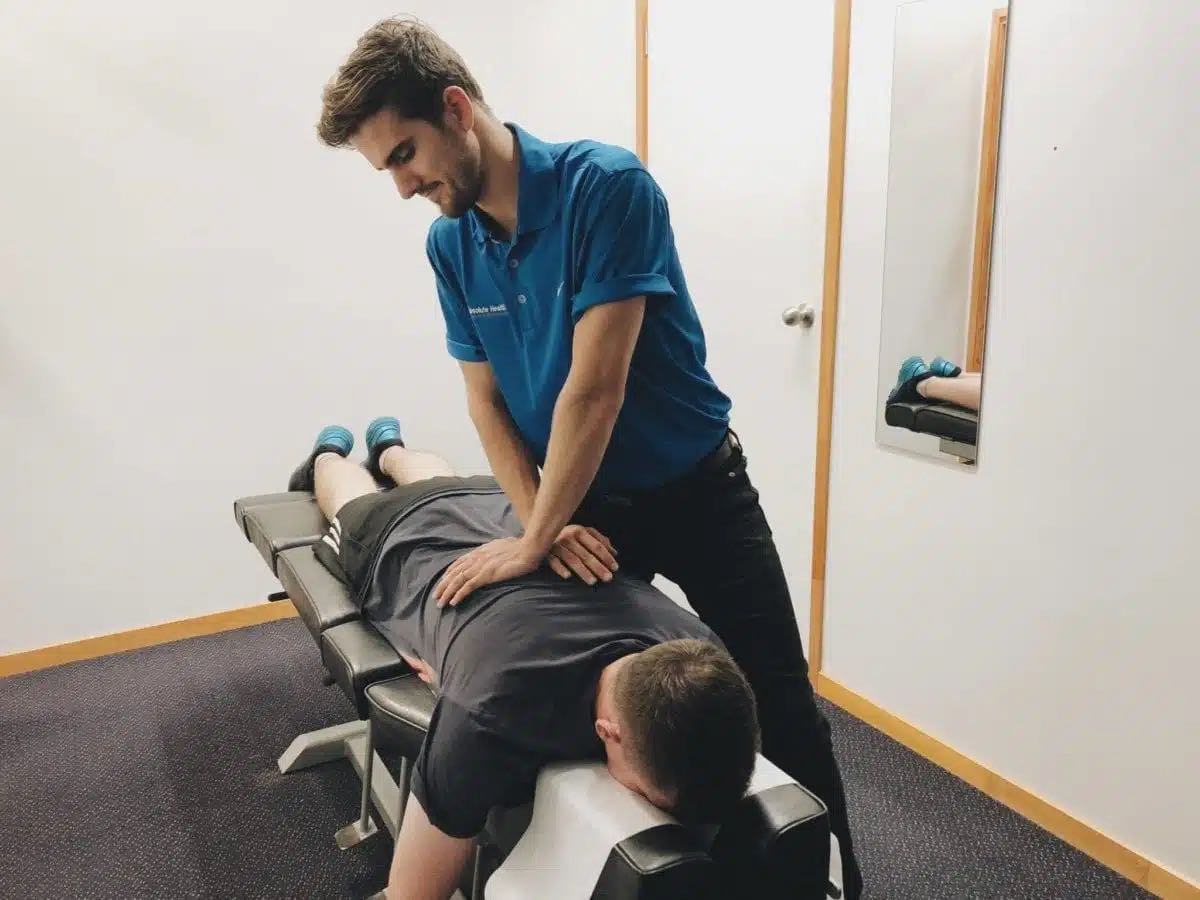
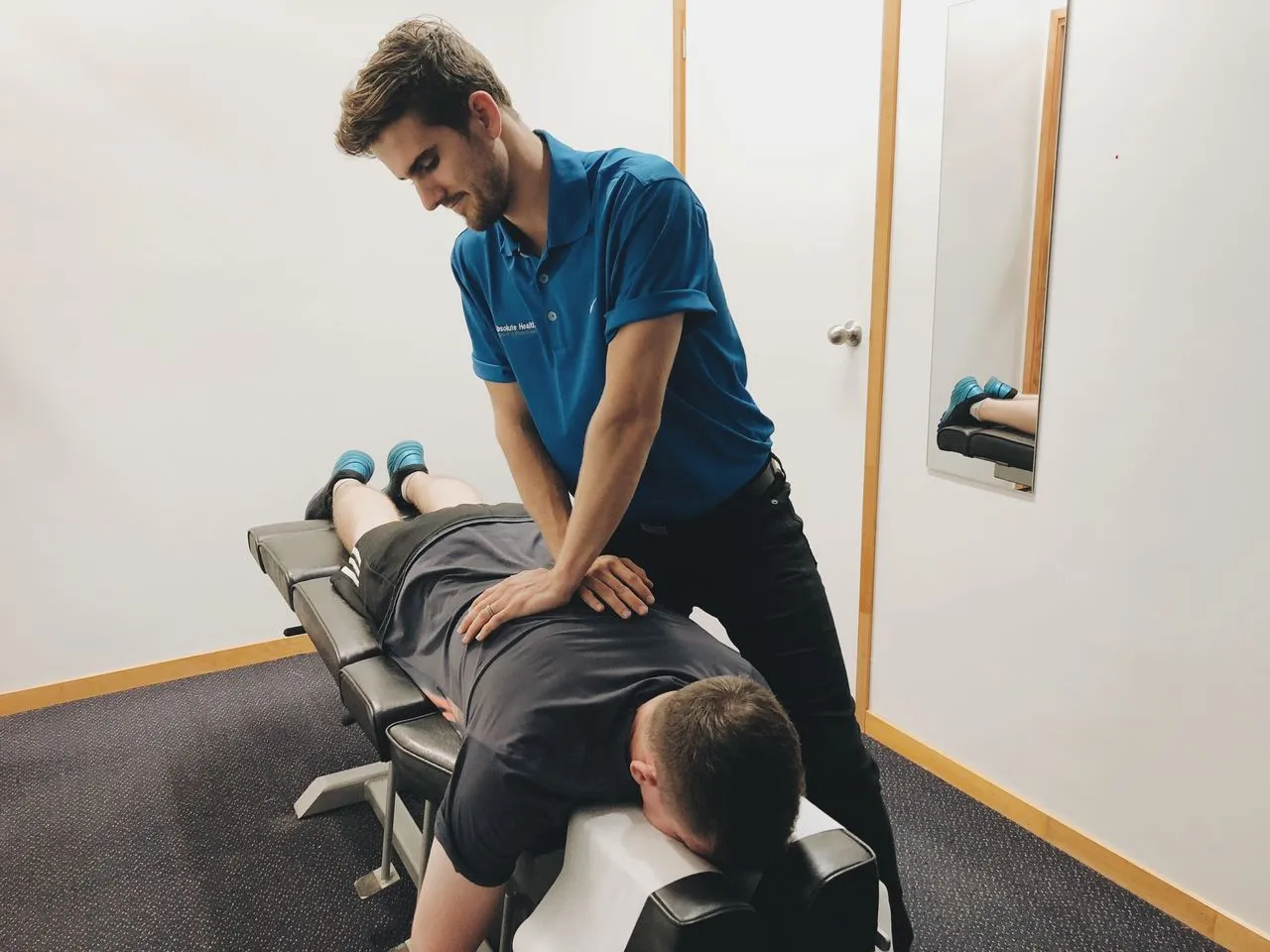
Chiropractic care focuses on restoring movement where it has been lost. For sciatica that means specific adjustments and mobilisation of the lumbar spine and pelvis to reduce joint restriction and take mechanical pressure off the irritated nerve, along with soft tissue work for the muscles that have gone into guard duty around it. Techniques are modified for nerve pain; nobody should be forcefully manipulating a spine with an acutely angry disc. Where imaging is clinically warranted, we take digital X-rays on site, which helps rule structural problems in or out before treatment starts. Patients with acute, mechanically-driven sciatica often notice meaningful change inside the first few visits. Our article on chiropractic treatment for sciatica goes deeper on this side.
Dealing with this on the Sunshine Coast?
Our chiropractors and physiotherapists treat this every day in Mooloolaba and Nambour — same-day appointments are often available.
What a physio does for sciatica
Physiotherapy owns the loading side of the problem. That means graded exercise to settle symptoms and restore capacity, nerve gliding techniques to help the sciatic nerve move freely again, and a progressive strength program for the trunk, hips and legs so the problem is less likely to return. A physio also manages the awkward middle phase: how much you should lift, sit, run or garden while things calm down. If your sciatica is recurrent, long-standing, or you want to get back to sport or heavy work, this structured rebuild is where physiotherapy shines. See our physiotherapy page for how we approach it.
So which one should you book?
A rule of thumb we use with our own patients. If your pain is recent, movement makes an obvious difference, and your back feels locked or restricted, starting with chiropractic makes sense. If your pain has hung around for months, flares when you increase activity, or keeps coming back every year, start with physiotherapy and expect a strength program. If you are not sure, book either. Whoever assesses you will tell you plainly if the other approach, or a combination, will serve you better. Under one roof that conversation happens in the hallway, not by referral letter.
| Chiropractor | Physiotherapist | |
|---|---|---|
| Focus | Joint movement and the spine itself | Muscles, load and movement retraining |
| Often best when | The back feels locked, restricted or sharply painful with movement | Pain flares with activity, or strength and flexibility have slipped |
| A first visit feels like | Assessment, hands-on adjustment or mobilisation, X-ray only if indicated | Assessment, hands-on treatment, targeted exercises to take home |
| Typical early goal | Restore movement, settle the acute episode | Build capacity so it doesn’t come back |
The short answer
Start with chiropractic if your back feels locked or the pain is sharp and spine-centred.
Start with physio if it flares with activity or keeps recurring and needs strengthening.
Genuinely unsure? Book either at our clinic - both work under one roof and will walk you to the right room.
The signs that mean skip both and see a doctor
A small set of symptoms alongside sciatica needs urgent medical assessment, not manual therapy: numbness in the saddle region, changes to bladder or bowel control, progressive weakness in the leg or foot, or sciatica in both legs at once. These are rare, and they are exactly the things both our chiropractors and physiotherapists screen for in a first appointment. If they show up, go to an emergency department.
Why we hedge towards both
Plenty of sciatica cases resolve with one discipline. The stubborn ones usually need movement restored and capacity rebuilt, which is two different jobs. At Absolute Health the two professions share notes, share patients and often share the same treatment plan for sciatica treatment on the Sunshine Coast: chiropractic care to get the spine moving and settle the acute phase, physiotherapy to rebuild the strength that keeps it fixed. No guessing about whether the other practitioner is any good, because they are twenty metres away.
Get assessed this week
Sciatica that gets treated early tends to behave better than sciatica that gets endured. Book online with either a chiropractor or a physiotherapist, or call us and describe what is happening; the front desk will point you to the right first appointment. Mooloolaba (07) 5478 2333, Nambour (07) 5441 4768.