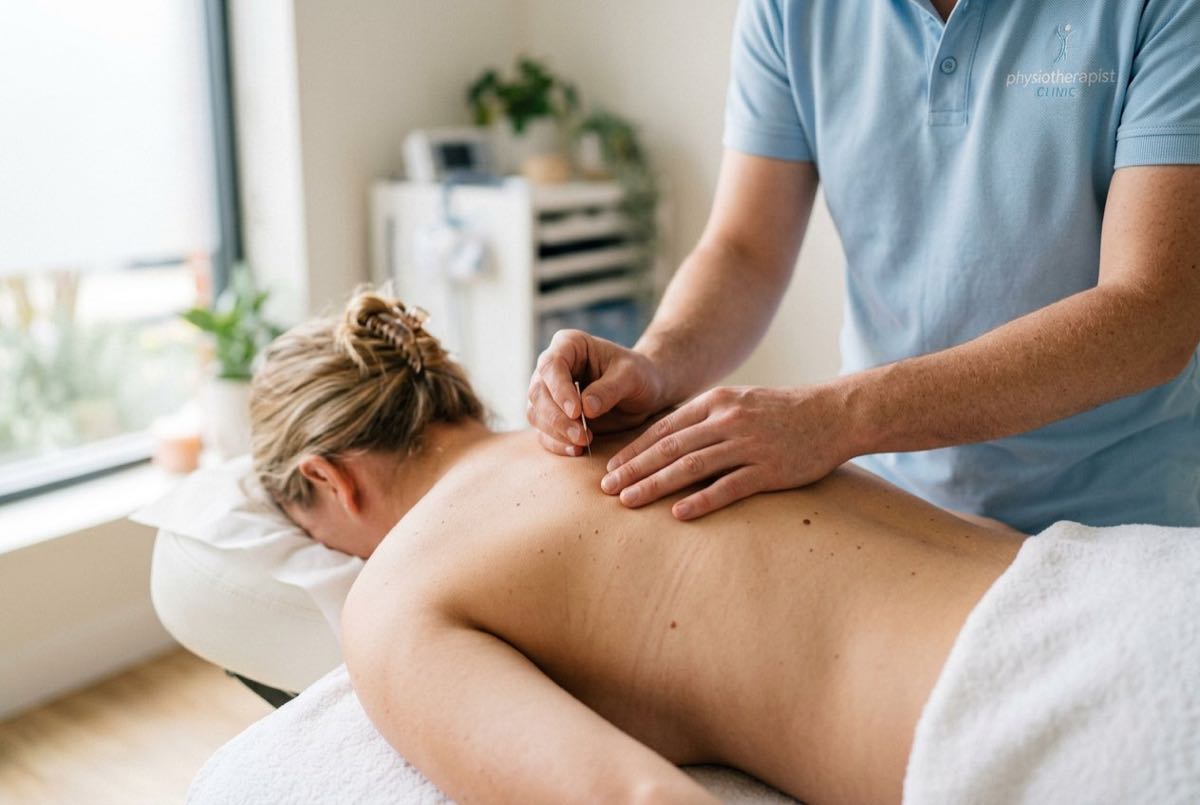
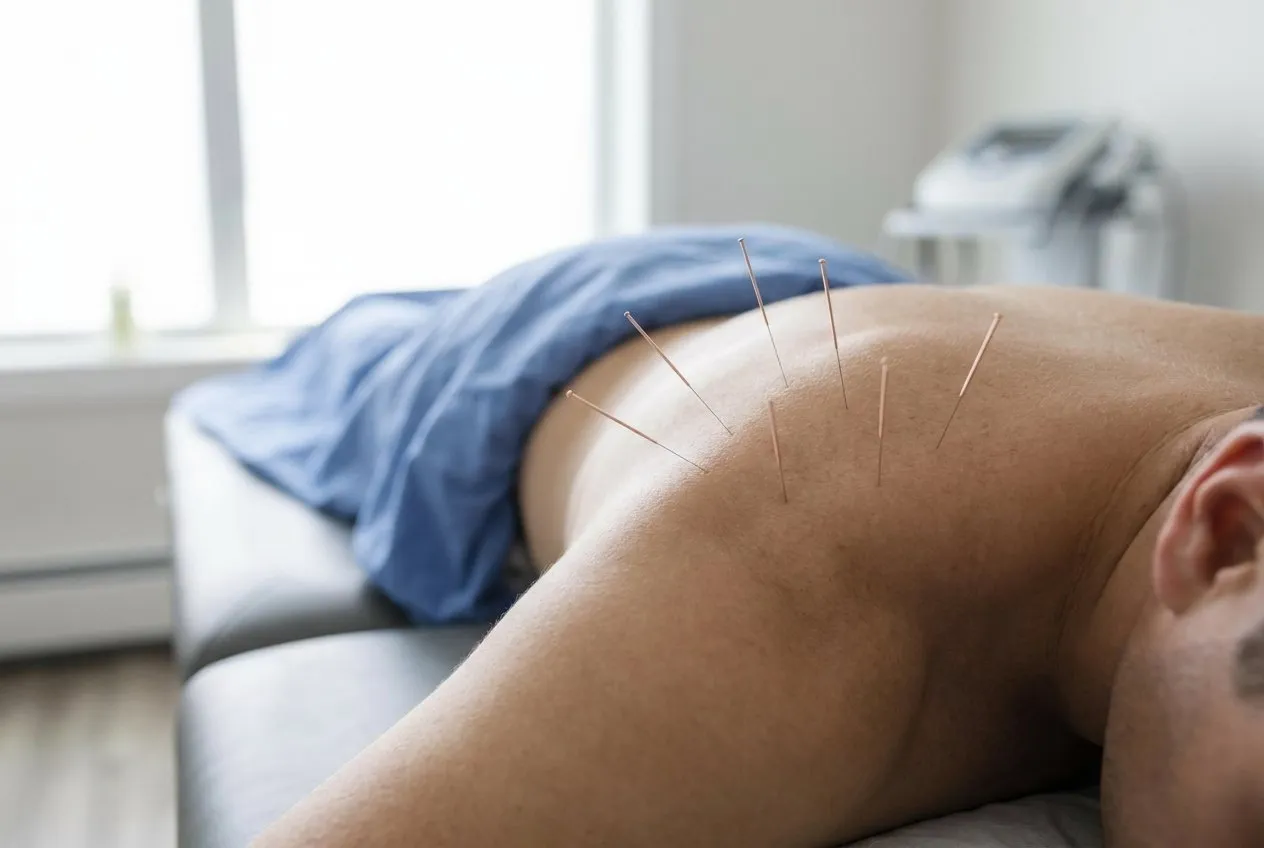
You had dry needling yesterday and today the muscle aches. Is that supposed to happen? In almost every case, yes. Post-needling soreness is common, short-lived and usually a sign the treatment found its target. Here is what the next 48 hours normally look like, how to make them more comfortable, and the small list of symptoms that deserve a phone call instead of patience.
Why you feel sore afterwards
Dry needling works by inserting a very fine filament needle into a trigger point, the tight, irritable knot within a muscle. When the needle hits the spot, the muscle often gives a brief involuntary flicker called a local twitch response. That twitch is the point of the exercise: it helps the tight band release and resets the chemistry that keeps the knot irritable. The trade-off is that the tissue has been mechanically stimulated, and for a day or two it responds the way muscle responds to any new stimulus. It aches. This is the expected response to dry needling on the Sunshine Coast rather than a sign something has gone wrong.
Most people describe the feeling as the heaviness after an unfamiliar workout, concentrated in the treated muscle rather than spread across the body. If you have read our article on how dry needling relieves muscle pain, this is the same mechanism seen from the morning after.
What is normal in the first 48 hours
All of the following sit comfortably within the normal range: a dull ache or heaviness in the treated muscle for one to two days, small bruises at needle sites, mild fatigue or drowsiness the evening after treatment, a brief flare of your original symptoms before they ease, and a little stiffness first thing the next morning. None of these mean anything has gone wrong, and none of them predict a bad outcome. Soreness usually peaks within the first 24 hours and fades on its own.
Still sore, or not sure it's normal?
Our Mooloolaba and Nambour physiotherapists can check how you're tracking and adjust your treatment — same-day appointments are often available.
What is not normal
A short list, because problems after dry needling are genuinely rare. Contact your physiotherapist promptly if pain keeps increasing after 72 hours rather than easing, if you notice numbness, pins and needles or weakness that spreads beyond the treated area, or if a needle site becomes red, hot and swollen rather than simply bruised. And treat one scenario as urgent: if you develop chest pain, shortness of breath or difficulty breathing in the hours after needling around the neck, shoulder or upper back, seek immediate medical care. It is a rare complication, but it is the one that cannot wait.
How to ease the soreness
Heat is your friend. A heat pack or a long warm shower relaxes the treated muscle and takes the edge off the ache. Keep moving gently through the day, since easy walking and light stretching settle soreness faster than lying still. If the muscle keeps tightening between sessions, that is usually a cue to review the loading plan with your physiotherapist on the Sunshine Coast. Drink water, keep caffeine and alcohol moderate, and postpone maximum-effort training for 24 to 48 hours. Ice has a place if one spot is especially tender, but do not ice the whole region for long stretches; cold tends to make treated muscle feel tight again.
Does soreness mean it worked?
Not exactly, and this cuts both ways. A strong ache does not mean the session was more effective, and no ache at all does not mean it failed. Response varies with the muscle treated, how irritable the trigger point was and how your nervous system reacts. What matters is the pattern over the following days: most people notice the original tightness or pain improving once the post-treatment soreness clears, typically from day two or three. The effect also tends to build across sessions rather than arriving all at once.
Wondering how this differs from acupuncture?
The needles are the same; the reasoning is not. Dry needling targets specific trigger points identified by physical assessment, while acupuncture follows traditional meridian theory. We have a full comparison in our article on dry needling versus acupuncture.
Book with a practitioner who explains as they go
At Absolute Health, dry needling is one tool inside a broader treatment plan, never the whole plan. Our physiotherapists talk you through what they are treating and what to expect afterwards, so nothing in this article should come as a surprise on the day. Learn more on our dry needling page, book online, or call (07) 5478 2333 for Mooloolaba or (07) 5441 4768 for Nambour.