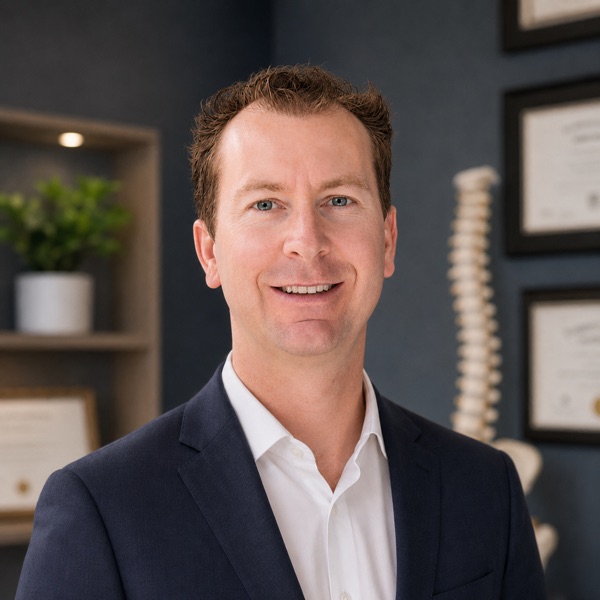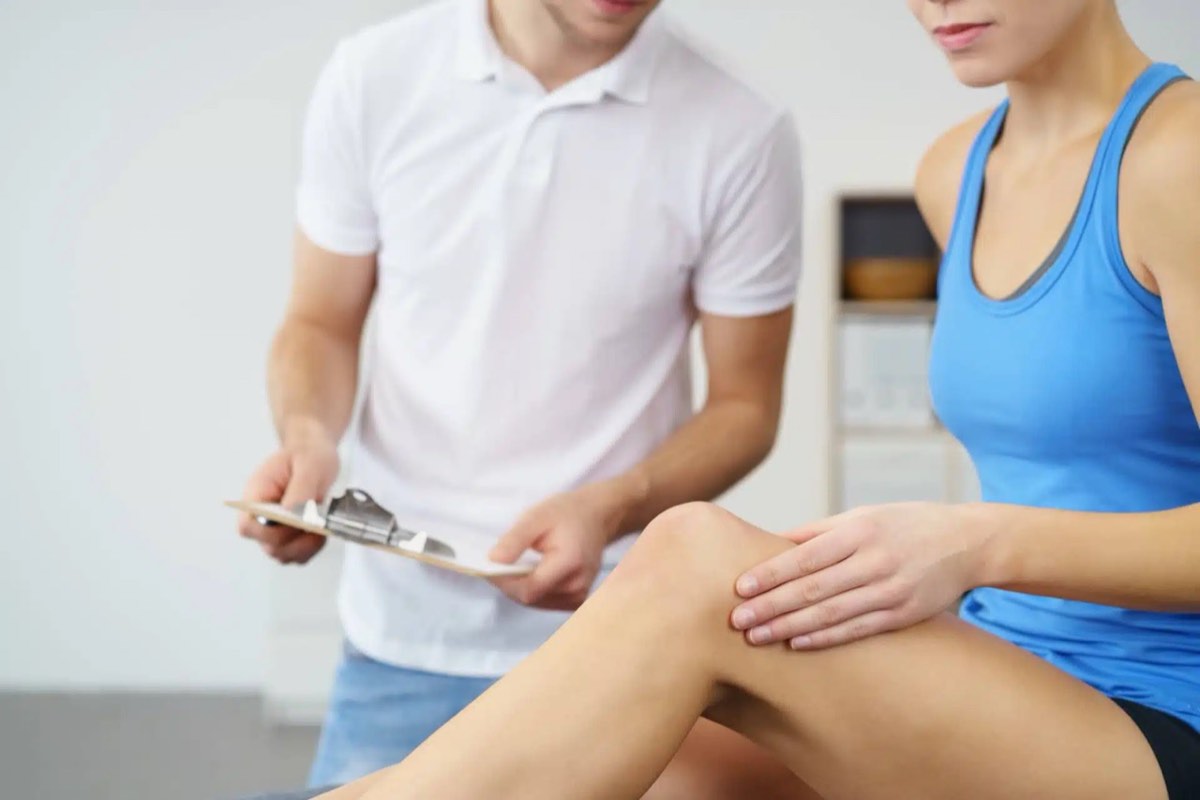

A TPI golf assessment is a physical screen developed by the Titleist Performance Institute. It tests how well your hips, mid-back, shoulders, wrists and ankles move, how well you control your pelvis and balance, and whether you can separate your upper body from your lower body. The results are mapped to the swing faults those restrictions tend to cause. At Absolute Health it runs as a physiotherapy consultation with our TPI-certified physiotherapist, Geoff Villacis, and you leave with treatment for what needs treating and exercises for what needs training.
Golfers put up with a lot. A back that seizes on the 14th, an elbow that flares every spring, a drive that has quietly lost fifteen metres since the knee started grumbling. The usual responses are a new driver, another lesson, or just playing less. A TPI assessment starts somewhere different: with the body making the swing.
Where TPI comes from
The Titleist Performance Institute was founded in 2003 by Dr Greg Rose and Dave Phillips at a purpose-built research facility in Oceanside, California. Since then TPI has screened and studied thousands of golfers, from major champions to weekend players, building what is probably the largest body of data on how the human body moves during a golf swing. Its certification program has trained more than 19,000 professionals across 63 countries, spanning golf coaching, medicine, fitness and junior development. The reach at the top of the game is hard to argue with: TPI reports that 18 of the last 20 major championships were won by players advised by a TPI Certified expert.
The idea underneath it: the Body-Swing Connection
TPI's core finding is easy to state. There is no single correct way to swing a golf club, but there is one most efficient swing for each player, and it depends on what that player's body can physically do. TPI calls this the Body-Swing Connection.
Think about what a swing asks of you. Your hips have to rotate while your pelvis stays level. Your mid-back has to turn further than your hips to store energy. Your lead shoulder, wrists and ankles all have jobs measured in fractions of a second. If one link can't do its job - say your hips have lost internal rotation - the movement doesn't stop. It relocates. Your lower back picks up the rotation your hips couldn't provide, and it does that a couple of hundred times every round, plus range balls.
That relocation shows up in recognisable patterns. TPI has catalogued the common swing characteristics - early extension, sway, slide, reverse spine angle, loss of posture - and mapped which physical restrictions tend to sit behind each one. That map is what makes the screen useful. A coach can see early extension on video; the screen shows why it's happening, and whether the fix is a swing thought or a hip that physically can't rotate.
Dealing with this on the Sunshine Coast?
Our chiropractors and physiotherapists treat this every day in Mooloolaba and Nambour — same-day appointments are often available.
What does a TPI golf assessment involve?
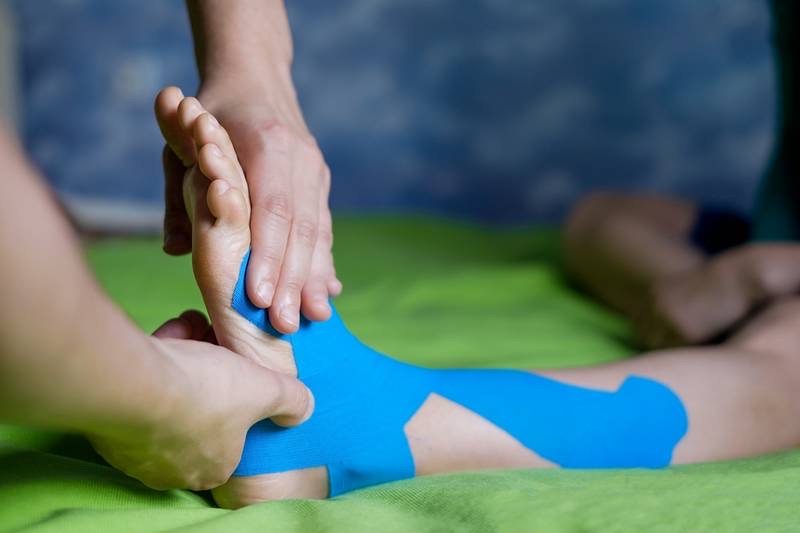
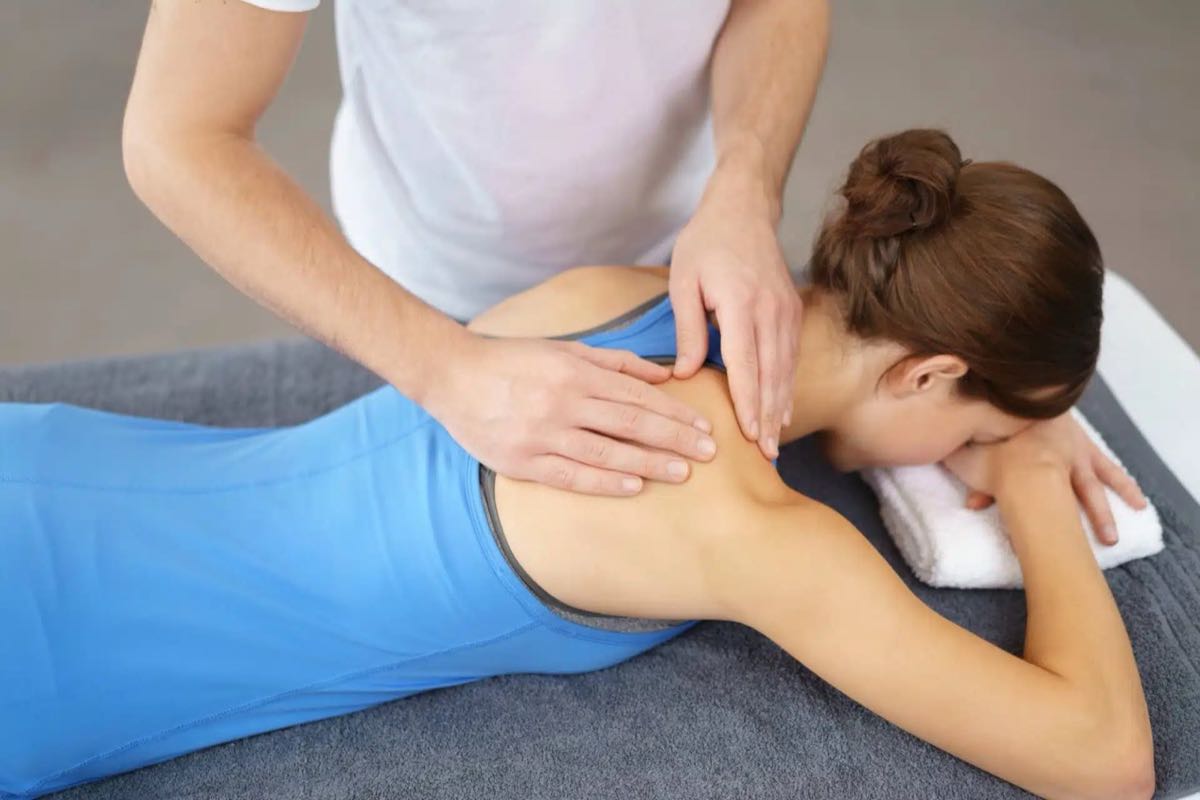
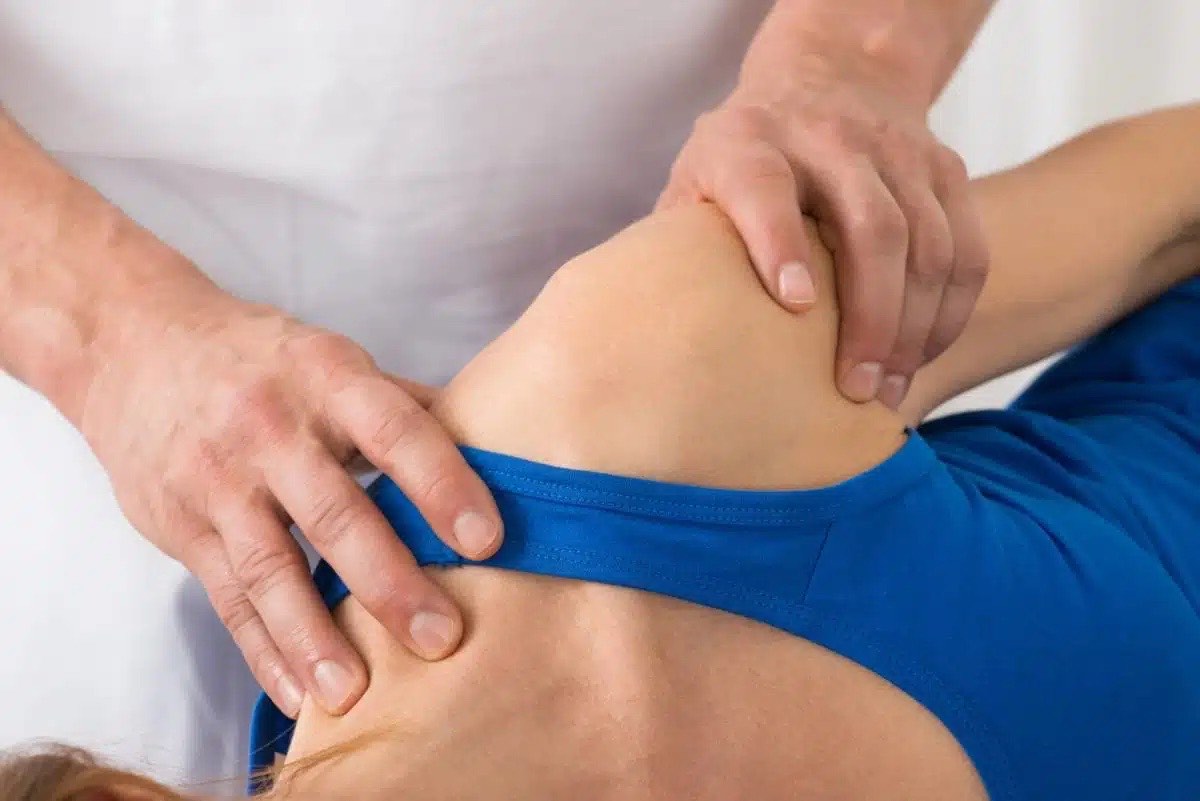
At Absolute Health the assessment runs as a physiotherapy consultation with our TPI-certified physiotherapist, Geoff Villacis. It has four parts. First, a proper history: injuries, playing habits, and what you actually want, whether that's more distance or just finishing a round without your back tightening. Second, the TPI physical screen, a series of simple movement tests covering hip and mid-back rotation, shoulder and wrist mobility, pelvis control, balance and the ability to separate upper body from lower body. You don't need your clubs, and none of it is strenuous. Third, your results are mapped against the swing characteristics they tend to produce. Fourth, you leave with a plan: hands-on physiotherapy for the restrictions that need treatment, and a targeted exercise program for the ones that need training.
The plan is where Geoff's dual qualification earns its keep. As both a physiotherapist and an accredited exercise physiologist he can treat the restriction and build the strength program behind it, rather than handing you a printout and wishing you luck. If you work with a golf coach, the findings can be shared, so the swing work and the physical work pull in the same direction instead of fighting each other.
Who actually benefits
It's tempting to file this under "for serious golfers", and that's roughly backwards. A touring professional has a team managing their body already. The golfer carrying an untreated hip restriction into 40 rounds a year is the weekend player. In practice the people who get the most from a screen are golfers with back pain during or after a round, anyone with a recurring golf injury, players who've plateaued despite lessons, juniors building a swing their body can support long-term, and older golfers who want to keep playing without the week of soreness afterwards.
Distance sits in this list too. Clubhead speed comes largely from the separation between upper and lower body, and separation is trainable. When a screen finds restricted rotation, treating and training it is one of the few genuine sources of "free" speed that doesn't involve swinging harder.
The video
The short video above walks through what a TPI assessment looks like at our clinic. If you'd rather watch than read, start there.
Booking one
TPI golf assessments are available at both our clinics, Mooloolaba and Nambour, and run as standard physiotherapy consultations, so private health extras apply as usual. You can read more on our Sunshine Coast TPI golf assessment page, book online with Geoff Villacis, or call (07) 5478 2333 for Mooloolaba or (07) 5441 4768 for Nambour and mention TPI.
Common questions
What is a TPI golf assessment?
A movement screen developed by the Titleist Performance Institute that tests the rotation, mobility, stability and balance a golf swing depends on, then links any restrictions to the swing faults they usually produce. It tells you whether a fault is a technique problem for your coach or a physical one for your physiotherapist.
Do I need to bring my clubs?
No. The screen is a series of simple movement tests done without clubs, and none of it is strenuous. Wear something you can move in.
Who should get a TPI assessment?
Golfers with back pain during or after a round, anyone with a recurring golf injury, players who have plateaued despite lessons, juniors building a swing their body can support, and older golfers who want to keep playing without a week of soreness afterwards. You do not need to be a serious golfer.
Is a TPI assessment covered by private health?
It runs as a standard physiotherapy consultation, so if your extras cover includes physiotherapy it applies as usual.
Can a TPI assessment help me hit the ball further?
Often, yes. Clubhead speed comes largely from the separation between upper and lower body, and that separation is trainable. When the screen finds restricted rotation, treating and training it is one of the few sources of extra distance that does not involve swinging harder.